Health and Safety Policy for Man with Van Removal Services
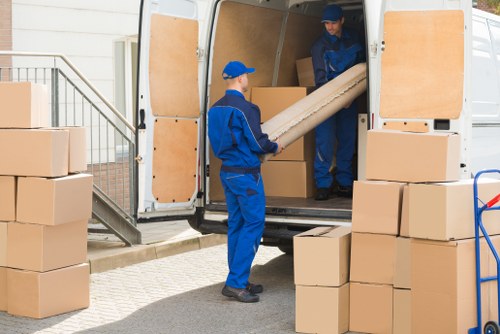 Purpose and commitment: This health and safety policy outlines the approach taken by our Man with Van Removal Services operation to protect staff, clients and the public. The policy applies to all activities associated with our removal van man teams and covers vehicle use, manual handling, site safety, bulky item removals and the general conduct of man & van removals. Our aim is to reduce risk by applying systematic controls, training and supervision so that every move is carried out safely and professionally.
Scope and responsibilities: The policy covers drivers, loaders, handlers and any helpers involved in man-with-van services. Management is responsible for putting the policy into practice while every operative has a duty to follow safe systems of work. Key responsibilities include hazard identification, reporting unsafe conditions, using provided personal protective equipment and cooperating with risk assessments. The removal van man or team leader must ensure safe loading practices and clear communication at every job.
 Risk assessment and controls: Before work begins, a dynamic risk assessment must be carried out to evaluate the environment, access points, stairways, lifts and parking arrangements. Controls are selected according to risk and may include mechanical aids, team lifting, protective footwear and high-visibility clothing. Common risks in man & van removals include manual handling injuries, slips, trips, vehicle collisions and damage to property. The following standard precautions must be observed:
- Use two-person lifts for awkward or heavy items where practicable.
- Secure loads properly inside the van using straps and protective padding.
- Check access routes and remove trip hazards before carrying items.
- Maintain clear communication between driver and handlers during loading and unloading.
Training, Equipment and Vehicle Safety
Training is central to safe man & van operations. All staff must receive induction training, refresher sessions and specific instruction on manual handling techniques, safe use of trolleys and dollies, and the correct operation of tail lifts if fitted. The man with a van operator must ensure all employees are competent to use lifting aids and are aware of safe stacking and packing methods to prevent load shifts during transit.
![Two male removal workers dressed in blue uniforms and matching blue caps are standing at the back of a white removals van, loading a large white sofa with a smooth fabric finish. The interior of the van is visible, showing several cardboard boxes of varying sizes stacked neatly. The van is parked on a residential driveway near a modern building with large windows and a light blue facade, which may be part of a property in the [POSTCODE] area near [TOWN]. One worker is holding the right armrest of the sofa while the other supports the opposite side, coordinating to carry the item safely. Natural daylight illuminates the scene, highlighting the neutral tones of the sofa's fabric and the workers’ uniforms. In the background, small garden plants and a pathway are visible, indicating a suburban or residential setting typical of local removals in the area. This scene illustrates a professional house removal service by Man With Van Removal Services, focusing on efficient and careful handling of furniture and household belongings during a move within the UK, possibly in or near [POSTCODE].](/pub/_photos/removals/f1208296784.jpg) Vehicle maintenance and checks are mandatory. Each removal van must undergo daily pre-start checks that include brakes, lights, tyres, mirrors and securing equipment. Records of inspections must be kept and defects reported immediately. Vehicles used for removals should be appropriately rated for the loads carried, well-maintained and supplied with necessary safety equipment such as warning triangles, first aid kits and fire extinguishers.
Vehicle maintenance and checks are mandatory. Each removal van must undergo daily pre-start checks that include brakes, lights, tyres, mirrors and securing equipment. Records of inspections must be kept and defects reported immediately. Vehicles used for removals should be appropriately rated for the loads carried, well-maintained and supplied with necessary safety equipment such as warning triangles, first aid kits and fire extinguishers.
Personal protective equipment (PPE) is provided where required. Operatives should wear suitable gloves, safety footwear and back support if necessary. PPE does not replace safe working practices but complements the hierarchy of controls. Where a hazard cannot be eliminated, engineering controls and administrative controls must be used to reduce exposure to risk.
Operational Procedures, Reporting and Review
Loading and unloading procedures should be documented for consistency. For complex moves, a written plan should identify roles, equipment needed and safe routes. The plan supports consistent delivery of service for customers and ensures the safety of the team. Use of mechanical aids and correct booking of crew sizes for heavy or oversized items is essential to prevent injuries and delays.
![A young couple with light skin and casual clothing, standing in a room with beige walls and wooden flooring, smiling and hugging each other as they prepare for a house move. Behind them, there are several cardboard moving boxes of various sizes stacked on the floor, some closed and others partially open, indicating packing in progress. The boxes are made of brown corrugated cardboard with visible flaps and tape, and some have printed labels or markings. The scene is well-lit, suggesting natural daytime light, and the overall environment suggests a residential setting, possibly a living room or hallway, in the process of moving within or from a property in the [POSTCODE] area near [TOWN], with the scene representative of services provided by Man With Van Removal Services specializing in local house removals.](/pub/_photos/removals/f1249393096.jpg) Incident reporting and investigation processes are in place to capture near-misses and accidents. All incidents must be reported without delay, investigated to determine root causes and followed by corrective actions. Records of incidents, training and maintenance are retained to demonstrate continual improvement. Communication of lessons learned is shared with all staff to prevent recurrence.
Incident reporting and investigation processes are in place to capture near-misses and accidents. All incidents must be reported without delay, investigated to determine root causes and followed by corrective actions. Records of incidents, training and maintenance are retained to demonstrate continual improvement. Communication of lessons learned is shared with all staff to prevent recurrence.
 Monitoring, auditing and policy review: This policy will be reviewed periodically and updated in line with operational changes, feedback and best practices for removal van operations. Management will carry out routine site audits, spot checks and performance reviews to ensure compliance. The company is committed to continual improvement through training, better equipment and ongoing risk assessment. Everyone involved in removal services has a role to play and must adhere to the standards set out in this policy to maintain a safe working environment for operatives, customers and the public.
Declaration: By following the measures set out in this policy ??? safe working procedures, adequate training, vehicle checks and management oversight ??? our man-with-van services will operate with the highest reasonable consideration for health and safety. This document represents the organisational commitment to safe removals and provides the framework for safe, efficient and respectful service delivery.
Key commitments include:
- Providing clear instructions, supervision and necessary equipment for safe work.
- Conducting risk assessments for all removal tasks and implementing controls.
- Maintaining vehicles and equipment to a safe standard and ensuring competent use.
- Recording and learning from incidents to improve future safety performance.
End of policy statement